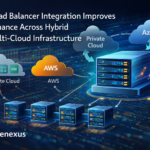



As organizations continue to expand their digital infrastructure across multiple cloud environments, maintaining application availability has become increasingly complex. Modern businesses often operate workloads across public clouds, private data centers, and hybrid environments, making traffic management a critical component of their overall cloud strategy.
Global Server Load Balancing (GSLB) helps organizations ensure that users are always directed to the best available application endpoint. By intelligently distributing traffic across geographically dispersed locations, GSLB improves uptime, enhances performance, and supports business continuity objectives.
Why GSLB Matters More Than Ever
Today’s users expect applications to remain available around the clock. Even brief outages can impact customer experience, productivity, and revenue. Traditional load balancing solutions are designed to distribute traffic within a single location, but they are not built to handle regional outages or failures affecting entire cloud environments.
GSLB extends traffic management across multiple locations, helping organizations maintain service availability even when individual sites experience issues. By continuously monitoring application health and automatically redirecting users when needed, GSLB plays an important role in modern cloud protection strategies.
In addition to availability benefits, GSLB supports disaster recovery planning, improves user experience through geographic routing, and contributes to overall infrastructure resilience.
Key Features of a Modern GSLB Solution
Not all GSLB platforms provide the same level of functionality. Organizations evaluating solutions for 2025 and 2026 should focus on features that support both performance and reliability.
Intelligent Health Monitoring
Effective GSLB platforms go beyond basic server checks. They continuously monitor application health and can detect issues before they impact users. Advanced health monitoring helps ensure traffic is only directed to fully operational resources.
Geographic Traffic Routing
Geographic routing allows users to connect to the closest or most appropriate location based on their region. This can reduce latency, improve page load times, and create a better overall user experience.
Flexible Failover Options
Every organization has different recovery requirements. A strong GSLB solution should support multiple failover strategies and provide the flexibility needed to align with business continuity goals.
Multi-Cloud and Hybrid Support
Many organizations operate across multiple environments. GSLB platforms should be able to manage traffic consistently across public cloud services, private infrastructure, and hybrid deployments from a unified management interface.
Security Integration
Modern cloud environments require multiple layers of protection. GSLB solutions that integrate with security tools, monitoring platforms, and access management systems help organizations build a more resilient infrastructure.
DNS Security Features
DNS remains a critical component of application availability. Solutions that support modern DNS security practices can help improve trust and reliability across distributed environments.
Types of GSLB Solutions Available Today
Organizations can generally choose between several approaches when implementing GSLB.
Cloud-Based Traffic Management Services
Cloud-native traffic management solutions are often attractive for organizations that operate primarily within a single cloud ecosystem. These services typically provide geographic routing, health monitoring, and failover capabilities while integrating closely with cloud resources.
Edge and CDN-Based Traffic Management
Some organizations use edge networks and content delivery platforms to improve application performance while benefiting from global traffic distribution capabilities. These solutions can be particularly useful for web applications serving users across multiple regions.
Dedicated Application Delivery Platforms
Dedicated application delivery platforms provide advanced traffic management, detailed configuration options, and deployment flexibility. These solutions are commonly used by organizations operating complex hybrid or multi-cloud environments where centralized control is a priority.
How to Evaluate a GSLB Solution
Selecting the right platform requires a clear understanding of your infrastructure requirements and business objectives.
Consider Your Environment
The number of environments you manage will influence the type of solution that makes sense. Organizations operating across multiple cloud providers and private infrastructure often require greater flexibility and centralized management capabilities.
Review Recovery Requirements
Failover speed can significantly impact business operations during an outage. Understanding your recovery objectives will help determine which platform features are most important.
Assess Management Complexity
A solution should not only meet technical requirements but also be manageable for your team. Intuitive interfaces, automation capabilities, and simplified administration can reduce operational overhead over time.
Evaluate Scalability
As applications grow, traffic management requirements evolve. Selecting a platform that can scale with your organization helps avoid costly migrations in the future.
How Edgenexus Supports Modern GSLB Requirements
The Edgenexus ADC platform includes integrated GSLB functionality designed to help organizations manage traffic across distributed environments. By combining traffic management, health monitoring, and application delivery capabilities within a single platform, teams can simplify operations while maintaining visibility across their infrastructure.
Organizations can implement active-active or active-passive deployment models, configure geographic routing policies, and leverage advanced health checks to improve application availability. The platform also provides centralized management capabilities that support cloud, hybrid, and on-premises environments.
For businesses seeking a flexible approach to global traffic management, integrated GSLB functionality can help simplify deployment and ongoing administration.
Frequently Asked Questions
What is Global Server Load Balancing?
Global Server Load Balancing is a technology that distributes user traffic across multiple geographically separated locations. It helps improve availability, performance, and resilience by directing users to the most appropriate application endpoint.
How does GSLB improve cloud protection?
GSLB helps maintain service availability during outages by automatically routing traffic away from unhealthy locations. It also supports disaster recovery strategies and improves infrastructure resilience.
Is GSLB suitable for hybrid cloud environments?
Yes. GSLB is particularly valuable in hybrid environments because it enables organizations to manage traffic across cloud resources and on-premises infrastructure from a centralized solution.
Can GSLB improve application performance?
Yes. Geographic routing and intelligent traffic distribution can help reduce latency and direct users to the most appropriate location, improving overall performance.
Final Thoughts
Cloud environments continue to become more distributed, making reliable traffic management increasingly important. GSLB helps organizations improve uptime, support disaster recovery objectives, and deliver a better user experience across multiple regions.
When evaluating solutions for 2025 and 2026, focus on flexibility, scalability, ease of management, and integration capabilities. The right platform should support your current infrastructure while providing the adaptability needed to meet future growth and evolving business requirements.