


Modern enterprises rely heavily on digital applications to support daily operations, customer services, and internal workflows. As organizations grow, their IT environments become more complex, often combining on-premise infrastructure, virtual machines, containers, and multiple cloud platforms. Managing application performance across such environments can be challenging, particularly when traffic demand fluctuates or infrastructure resources are distributed across different locations.
This is where intelligent load balancing becomes an important part of a resilient IT strategy. By introducing advanced traffic management into the infrastructure stack, organizations can improve application performance, reliability, and scalability without disrupting existing systems.
The Challenge of Complex IT Environments
Enterprise IT infrastructure today rarely exists in a single environment. Many organizations operate within hybrid or multi-cloud architectures where applications run across different platforms and services. While this approach provides flexibility and scalability, it also creates challenges in terms of traffic distribution, monitoring, and application delivery.
Without efficient traffic management, users may experience slow response times, application errors, or service interruptions during peak usage periods. As digital services become more critical, maintaining consistent application performance becomes essential.
The Role of Intelligent Load Balancing
Load balancing helps distribute incoming application traffic across multiple servers or application instances. This ensures that no single server becomes overloaded and allows applications to remain responsive even during high traffic volumes.
Intelligent load balancing goes a step further by using advanced traffic management capabilities such as Layer-7 routing, automated traffic rules, and health monitoring. These capabilities enable IT teams to manage application delivery more efficiently and adapt quickly to changing infrastructure demands.
Integrating Load Balancing into Existing Infrastructure
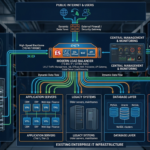
Many enterprises already rely on established networking platforms such as Citrix NetScaler or F5 BIG-IP iSeries to support application delivery. Instead of replacing these systems, organizations can integrate intelligent load-balancing solutions as an additional layer within the infrastructure.
This integration approach allows businesses to enhance traffic control, improve visibility, and strengthen application resilience while continuing to use their existing technology investments.
A modern load balancing platform can be deployed across several environments, including:
- Virtualized infrastructure
- Private data centers
- Hybrid cloud environments
- Multi-cloud architectures
This flexibility makes it easier for IT teams to extend traffic management capabilities wherever applications are hosted.
Improving Application Reliability and Performance
One of the key advantages of intelligent load balancing is the ability to maintain consistent application availability. By monitoring the health of servers and services, load balancers can automatically redirect traffic away from unavailable resources.
This capability helps organizations:
- Reduce service interruptions
- Maintain application uptime
- Handle sudden traffic spikes
- Improve user experience
When integrated properly, intelligent load balancing becomes a critical component of a resilient application delivery strategy.
Supporting Scalable Digital Infrastructure
As organizations expand their digital services, infrastructure demands continue to grow. New applications, microservices, and cloud workloads increase the complexity of traffic management.
Integrating intelligent load balancing into the infrastructure stack helps organizations scale their applications efficiently. IT teams can add new servers, deploy additional services, or extend workloads to the cloud while maintaining balanced traffic distribution and consistent performance.
Conclusion
In complex IT environments, reliable application delivery requires more than just infrastructure capacity. It requires intelligent traffic management that can adapt to changing workloads and distributed systems.
By integrating advanced load balancing capabilities into existing infrastructure, organizations can strengthen application delivery, improve system resilience, and support future growth without disrupting their current technology investments.
Intelligent load balancing provides the visibility, automation, and flexibility that modern IT teams need to keep applications running smoothly in increasingly complex environments.
FAQs
1. What is intelligent load balancing in enterprise IT environments?
Intelligent load balancing is a traffic management approach that distributes application requests across multiple servers based on real-time conditions. This helps maintain performance, availability, and reliability across complex IT infrastructures.
2. Why is load balancing important for modern IT infrastructure?
Load balancing ensures that application traffic is distributed efficiently across available resources. This prevents server overload, improves response times, and helps maintain high application availability.
3. How does intelligent load balancing support hybrid and multi-cloud environments?
In hybrid and multi-cloud environments, applications may run across different platforms and locations. Intelligent load balancing helps route traffic efficiently between these environments, ensuring consistent performance and reliability.
4. Can intelligent load balancing work with existing networking platforms?
Yes. Intelligent load balancing solutions can integrate with existing networking tools and infrastructure, allowing organizations to enhance their traffic management capabilities without replacing current systems.
5. How does EdgeNexus support application delivery in complex environments?
EdgeNexus provides advanced load balancing and traffic management capabilities that help organizations improve application availability, performance, and scalability across hybrid and multi-cloud infrastructures.
6. What role do health checks play in load balancing?
Health checks continuously monitor the status of servers and services. If a server becomes unavailable, the load balancer automatically redirects traffic to healthy servers to maintain uninterrupted service.
7. How does load balancing improve application performance?
Load balancing distributes traffic across multiple servers, ensuring no single system becomes overloaded. This helps reduce response times and improves overall application performance.
8. What is Layer-7 load balancing?
Layer-7 load balancing operates at the application level, enabling traffic routing based on application data such as URLs, cookies, or HTTP headers. This allows for more intelligent and flexible traffic management.
9. Can load balancing help organizations scale their infrastructure?
Yes. Load balancing allows organizations to add additional servers or application instances as traffic grows, ensuring that workloads remain balanced and performance remains stable.
10. What should organizations consider when implementing intelligent load balancing?
Organizations should evaluate factors such as deployment flexibility, compatibility with existing infrastructure, scalability, automation capabilities, and support for hybrid or multi-cloud environments.