


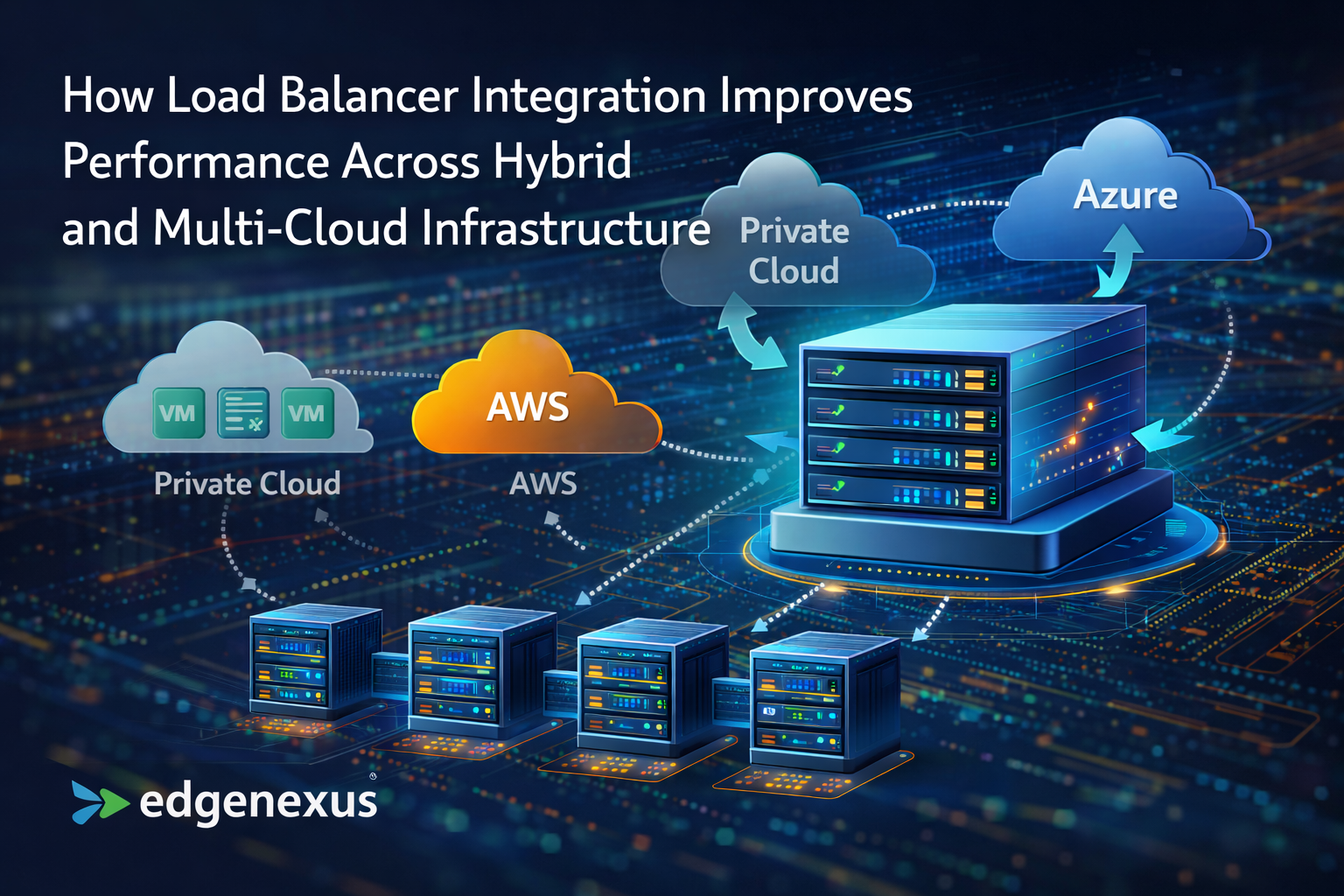
As organizations continue to modernize their IT environments, many are adopting hybrid and multi-cloud strategies to improve flexibility, scalability, and resilience. Applications are no longer hosted in a single data center. Instead, workloads may run across private infrastructure, public cloud platforms, and virtualized environments simultaneously.
While this distributed approach offers many advantages, it also introduces new challenges related to traffic management, application performance, and infrastructure visibility. Integrating a modern load balancing solution into the infrastructure stack can help organizations manage these complexities and maintain consistent application performance across environments.
The Growing Role of Hybrid and Multi-Cloud Infrastructure
Hybrid and multi-cloud architectures allow organizations to distribute workloads across multiple platforms. For example, an enterprise might run core applications in a private data center while deploying scalable services in the cloud.
This approach supports flexibility and disaster recovery, but it also requires efficient traffic management between environments. Without proper control over how requests are routed, organizations may experience uneven server load, latency, or inefficient resource utilization.
Why Load Balancer Integration Matters
A load balancer helps distribute incoming traffic across multiple servers or application instances. When integrated into hybrid or multi-cloud environments, it acts as a central control point for traffic distribution and application delivery.
By intelligently routing requests to available resources, load balancing improves the overall performance and reliability of applications. Users are automatically directed to healthy servers, ensuring that services remain accessible even during periods of high demand.
Supporting Existing Infrastructure Investments
Many enterprises already use established application delivery platforms such as Citrix NetScaler or F5 BIG-IP iSeries as part of their networking architecture. Integrating additional load-balancing capabilities can complement these existing systems by providing enhanced traffic visibility and flexible deployment options.
Rather than replacing current technologies, integration allows organizations to extend traffic management across new infrastructure layers, including cloud environments and containerized workloads.
Improving Application Performance and Availability
In hybrid and multi-cloud environments, traffic may originate from multiple geographic regions and access applications hosted in different platforms. Load balancers help ensure that requests are directed to the most appropriate server or service based on predefined rules and health monitoring.
This improves several key aspects of application delivery:
- Faster response times for users
- Better distribution of workloads across environments
- Reduced risk of server overload
- Increased application uptime
With intelligent traffic routing, organizations can maintain consistent performance even as infrastructure grows more complex.
Enabling Scalable and Flexible Infrastructure
As digital services expand, organizations must continuously scale their infrastructure to meet growing demand. Integrating load balancing into hybrid and multi-cloud environments allows IT teams to add new resources quickly without disrupting existing services.
New servers, applications, or cloud workloads can be introduced into the infrastructure while the load balancer automatically distributes traffic across available resources. This flexibility helps businesses maintain a stable and scalable application delivery environment.
Conclusion
Hybrid and multi-cloud infrastructure offers organizations the flexibility needed to support modern digital services, but it also increases the complexity of traffic management. Integrating load balancing into the infrastructure stack helps unify traffic control, improve performance, and maintain reliable application delivery across multiple environments.
By strengthening existing infrastructure with intelligent traffic management, organizations can ensure their applications remain responsive, scalable, and resilient in today’s distributed IT landscape.
FAQs
1. What is load balancer integration in hybrid and multi-cloud environments?
Load balancer integration refers to implementing a traffic management solution that distributes application requests across multiple servers or platforms running in different environments such as private data centers and public clouds.
2. Why is load balancing important in hybrid and multi-cloud infrastructure?
Hybrid and multi-cloud environments involve applications running across different platforms. Load balancing helps distribute traffic efficiently between these systems, ensuring stable performance and preventing server overload.
3. How does load balancing improve application performance?
Load balancing routes user requests to the most suitable server or application instance. This reduces response time, prevents bottlenecks, and ensures users experience consistent application performance.
4. Can load balancers work across multiple cloud providers?
Yes. Modern load balancing solutions can operate across multiple cloud platforms and on-premise infrastructure, enabling organizations to manage traffic across hybrid and multi-cloud environments effectively.
5. How does load balancing improve application availability?
Load balancers monitor server health and automatically redirect traffic to available resources if a server fails. This helps maintain high application uptime and reduces the risk of service disruptions.
6. Can load balancers integrate with existing networking platforms?
Yes. Load balancing solutions can integrate with existing networking tools and application delivery platforms, allowing organizations to strengthen their infrastructure without replacing their current systems.
7. What challenges does load balancing solve in hybrid environments?
Load balancing helps address challenges such as uneven traffic distribution, server overload, latency issues, and infrastructure complexity in hybrid IT environments.
8. How does load balancing support infrastructure scalability?
As traffic demand increases, organizations can add additional servers or cloud resources. The load balancer automatically distributes traffic across these new resources, ensuring balanced workloads and consistent performance.
9. What role do health checks play in load balancing?
Health checks continuously monitor the availability and performance of servers. If a server becomes unresponsive, the load balancer redirects traffic to healthy servers to maintain service continuity.
10. What should organizations consider when implementing load balancing in hybrid and multi-cloud environments?
Organizations should evaluate factors such as compatibility with existing infrastructure, deployment flexibility, traffic management capabilities, scalability, and support for hybrid and multi-cloud architectures.