

From customer-facing web apps to internal APIs and SaaS platforms, applications handle sensitive data, critical workflows, and real-time transactions. As a result, they have become the primary target for cyberattacks.
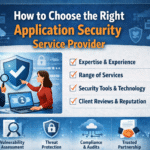
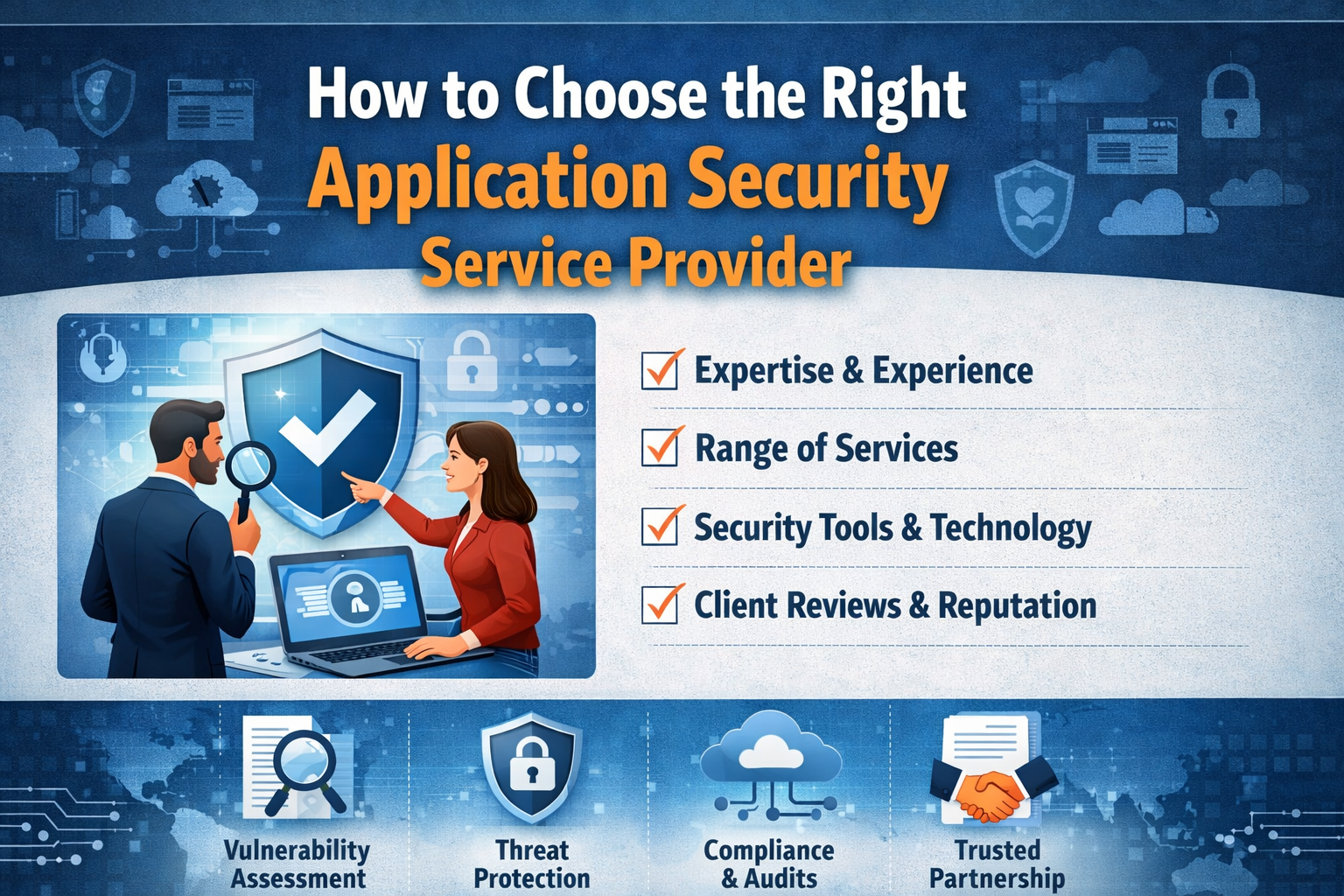
Choosing the right Application Security Service Provider is no longer just a technical decision; it’s a business-critical investment that directly impacts uptime, compliance, customer trust, and revenue.
This guide explains how to choose the right application security service provider, what capabilities truly matter in 2025–2026, and how modern platforms like Edgenexus fit into this evolving security landscape.
1. What is an application security service provider?
An Application Security Service Provider delivers technologies and services designed to protect applications from threats at the application layer (Layer 7).
These providers typically offer a combination of:
- Web Application Firewall (WAF)
- API security
- Bot and DDoS protection
- SSL/TLS inspection and offloading
- Traffic monitoring and threat detection
- Compliance and logging support
Unlike traditional network security vendors, application security providers focus on how applications behave, not just where traffic comes from.
2. Why choosing the right provider matters more than ever
Attackers today don’t just scan networks; they exploit:
- Vulnerable APIs
- Authentication flows
- Business logic
- Third-party integrations
At the same time, applications are now:
- Distributed across hybrid and multi-cloud environments
- Continuously updated via CI/CD pipelines
- Accessed globally by users and bots
A weak or poorly chosen application security provider can lead to:
- Data breaches
- Downtime
- Compliance violations
- Brand damage
- Revenue loss
That’s why selection must be strategic, not reactive.
3. Key criteria to evaluate an application security service provider
3.1 Strong Application-Layer (Layer 7) Protection
Your provider must offer deep Layer 7 visibility and protection against:
- OWASP Top 10 vulnerabilities
- SQL Injection
- Cross-Site Scripting (XSS)
- CSRF
- File inclusion attacks
- API abuse
If a provider focuses mainly on IPs and ports, it’s not application security.
3.2 Support for Modern Application Architectures
Applications today run across:
- On-prem data centers
- Public clouds (AWS, Azure, GCP)
- Hybrid environments
- Kubernetes and containers
A strong provider must support:
- Hybrid cloud deployment
- Multi-cloud consistency
- Microservices and APIs
- Dynamic scaling
Security should follow the application, not be tied to a single environment.
3.3 Integrated Web Application Firewall (WAF)
A modern application security provider should deliver a built-in WAF, not a bolt-on product.
Key WAF capabilities include:
- OWASP Top 10 protection
- Custom rule creation
- False-positive control
- API-aware inspection
- SSL/TLS decryption and inspection
This reduces complexity and improves response time.
3.4 Automation, APIs, and DevOps Compatibility
Security must move at the speed of development.
Choose a provider that supports:
- REST APIs
- Infrastructure as Code (Terraform, Ansible)
- CI/CD pipeline integration
- Automated policy updates
Manual-only security solutions slow teams down and increase risk.
3.5 Scalability and Performance Under Load
Security should never become a bottleneck.
Evaluate whether the provider can:
- Handle high traffic volumes
- Scale automatically during traffic spikes
- Maintain low latency
- Support global users
Look for solutions integrated with load balancing and traffic optimization, not just inspection.
3.6 Advanced Threat Detection & Bot Protection
Modern threats include:
- Credential stuffing
- Scraping
- Automated fraud
- Layer 7 DDoS attacks
Your provider should offer:
- Bot detection and mitigation
- Rate limiting
- Behavioral analysis
Application-layer DDoS protection
3.7 Centralized Visibility & Observability
Security teams need visibility, not just blocking.
Look for:
- Real-time dashboards
- Detailed logs
- Threat analytics
- Compliance reporting
- Alerting and integration with SIEM tools
Good visibility shortens response time and improves decision-making.
3.8 Compliance & Governance Support
If you operate in regulated industries, your provider must help support:
- PCI DSS
- GDPR
- HIPAA
- SOC 2
This includes:
- Traffic logging
- Access controls
- Data masking
- Policy enforcement
3.9 Transparent Pricing & Predictable TCO
Avoid providers with:
- Complex licensing
- Hidden costs
- Pricing is tied heavily to traffic spikes
Modern businesses prefer:
- Software-based pricing
- Predictable costs
- Lower operational overhead
3.10 Vendor Flexibility & Future Readiness
Choose a provider that:
- Avoids vendor lock-in
- Supports open standards
- Innovates continuously
- Adapts to new attack patterns
Application security is not static; your provider shouldn’t be either.
4. How modern platforms like Edgenexus fit in
Edgenexus delivers application security as part of a modern Application Delivery Controller (ADC) platform, combining:
- Integrated WAF
- SSL/TLS offloading
- Layer 7 traffic inspection
- Bot and API protection
- FlightPath rule engine for traffic control
- Hybrid and multi-cloud deployment
- Automation-first design
This approach reduces tool sprawl and ensures security, performance, and availability work together.
Conclusion
Choosing the right application security service provider is about more than blocking attacks it’s about enabling your business to grow securely.
The right provider should:
- Protect applications at Layer 7
- Support hybrid and cloud-native environments
- Integrate with DevOps workflows
- Scale without performance loss
- Simplify compliance and operations
Modern platforms like Edgenexus represent a new generation of application security, one that aligns security with application delivery, performance, and agility.
In a threat landscape that evolves daily, choosing wisely today prevents costly incidents tomorrow.
Frequently asked questions (FAQs)
1. What does an application security service provider do?
They protect web applications and APIs from application-layer threats such as injections, bots, and abuse.
2. Is a WAF enough for application security?
A WAF is essential, but modern security also requires automation, API protection, and traffic intelligence.
3. Why is Layer 7 security important?
Most modern attacks exploit application logic, not network ports or IP addresses.
4. Can one provider secure apps across a hybrid cloud?
Yes, modern providers are designed to enforce policies consistently across on-prem and cloud environments.
5. How does automation improve application security?
It reduces human error, speeds deployment, and ensures consistent policy enforcement.
6. Does application security affect performance?
Modern platforms are optimized to inspect traffic without adding noticeable latency.
7. How do I evaluate a provider’s scalability?
Check their ability to auto-scale, handle peak traffic, and maintain low latency.
8. Is application security required for compliance?
While not always mandatory, it’s strongly recommended and often expected during audits.
9. Should security be separate from load balancing?
Modern architectures benefit from integrated security and traffic management to reduce complexity.
10. Why is Edgenexus a strong application security choice?
Because it combines WAF, traffic control, automation, and hybrid cloud support in a single platform.