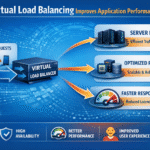



When applications experience massive traffic spikes—during peak business hours, global product launches, flash sales, or seasonal e-commerce events performance becomes everything. Even a few seconds of delay can lead to revenue loss, user abandonment, and long-term damage to brand reputation.This is where Hardware Application Delivery Controllers (ADCs) have traditionally played a critical role.
Before virtual ADCs, cloud-native ADCs, and software-defined load balancers became mainstream, hardware ADCs were the backbone of application performance and network optimization. They were purpose-built to handle intense workloads, high concurrency, SSL-heavy traffic, and mission-critical applications.In this article, we explore how hardware ADCs optimize high-traffic applications, why they were so effective, where they fall short today, and how modern solutions (like Edgenexus) extend this capability more flexibly.
1. What Are Hardware ADCs?
A Hardware ADC is a dedicated, physical appliance built specifically to accelerate, secure, and optimize application traffic. These devices traditionally came from vendors like:
- F5
- CitRix Netscaler
- Radware
- Kemp
Compared to software-based load balancers, hardware ADCs use custom processors, ASICs, and FPGAs designed to execute networking and SSL workloads at very high speed.
2. How Hardware ADCs Optimize High-Traffic Applications
Hardware ADCs became the gold standard for enterprises because of their unmatched performance during heavy, unpredictable, and latency-sensitive traffic.
Below are the core ways they optimize high-traffic environments.
2.1 Dedicated Processing Power for High Throughput
Hardware ADCs use specialized chips optimized for:
- SSL handshake acceleration
- Packet processing
- Compression
- Decompression
- Caching
- Traffic classification
This reduces the load on backend servers and ensures applications stay responsive even during extreme traffic surges.
Performance benefits:
- ✔ Low CPU overhead
- ✔ High throughput
- ✔ Consistent performance under stress
- ✔ Predictable user experience
2.2 Ultra-Fast SSL/TLS Offloading
High-traffic applications often handle millions of encrypted transactions per second.
Hardware ADCs shine here because they have:
- SSL acceleration chips
- Dedicated cryptographic processors
- Hardware-based key management
This allows them to terminate SSL sessions faster and more efficiently than software-only solutions.
Result:
- ✔ Faster, secure connections
- ✔ Massive SSL throughput
- ✔ Lower overhead on application servers
2.3 Intelligent Load Distribution During Traffic Peaks
Hardware ADCs use smart algorithms to distribute user requests across servers based on:
- Current server load
- Response times
- Health checks
- Connection counts
- Session affinity
This prevents a single server from becoming overloaded and protects application performance even during unexpected traffic bursts.
2.4 Advanced Caching & Compression
Many hardware ADCs include built-in acceleration features like:
- Static object caching
- Response compression
- TCP optimization
- Connection multiplexing
These features reduce:
Latency
Bandwidth consumption
Server workload
So applications load faster especially during high traffic.
2.5 High Availability & Redundancy at Hardware Level
Hardware ADCs support:
- Active-active clustering
- Active-passive failover
- State synchronization
- Redundant power supplies
- Hot-swappable components
These make them incredibly resilient for mission-critical systems like:
- Banking applications
- Healthcare systems
- Telecom portals
- Large-scale e-commerce platforms
2.6 Application Acceleration Features
High-traffic applications are optimized through:
- Layer 7 routing
- Protocol optimization
- Low-latency packet forwarding
- Persistent connections
- Content switching
These ensure that applications respond quickly even under heavy concurrent loads.
2.7 Prioritization Through QoS & Traffic Shaping
Hardware ADCs can enforce Quality-of-Service (QoS) rules to:
- Prioritize important traffic
- Limit non-critical workloads
- Prevent bandwidth abuse
This guarantees that high-value transactions (like payments or logins) always receive priority
3. Why Hardware ADCs Were the Standard for High-Traffic Applications
Hardware ADCs dominated the enterprise market for years due to:
- Superior throughput
- Low latency
- Dedicated processing
- Resilience
- Strong vendor ecosystems
- Guaranteed performance under stress
For many large enterprises, nothing else could match the reliability needed during peak demand.
4. Limitations of Hardware ADCs in Modern Architectures
Despite their performance, hardware ADCs struggle with modern requirements.
High Cost (CAPEX + Maintenance)
Expensive to purchase, upgrade, and maintain.
Limited Cloud Integration
Not designed for multi-cloud or hybrid-cloud environments.
Poor Automation Support
Lack of modern APIs, IaC support, and DevOps compatibility.
Fixed Physical Capacity
Cannot scale instantly like virtual ADCs.
Vendor Lock-in
Proprietary ecosystems restrict flexibility.
Many Models Reaching EOL/EOS
F5, Netscaler, and Citrix hardware is being retired rapidly.
This has led organizations to adopt virtual, software, and cloud ADCs like Edgenexus for greater flexibility and lower cost.
5. Modern ADCs: Delivering Hardware Performance Without the Hardware
Today’s virtual ADCs, such as Edgenexus, achieve hardware-level performance through:
- Multi-core optimization
- Smart traffic engines
- SSL acceleration libraries
- Edge computing integrations
- Cloud-native scaling
- GSLB capabilities
They offer all the strengths of hardware ADCs, plus:
- ✔ Lower cost
- ✔ Faster deployment
- ✔ Global scalability
- ✔ Automation & APIs
- ✔ Virtual & cloud support
This makes them ideal for modern applications that must scale instantly across clouds and regions.
Conclusion
Hardware ADCs were instrumental in optimizing high-traffic applications for over a decade. With dedicated processors, hardware acceleration, and unmatched reliability, they helped enterprises deliver fast, secure, and resilient digital experiences.
But as cloud adoption grows and architectures evolve, organizations now require more flexibility, automation, and scalability than hardware ADCs can provide.
Modern solutions like Edgenexus Virtual ADC deliver the same high performance without the limitations of physical appliances making them the natural choice for next-generation application delivery.
Frequently Asked Questions (FAQs)
1. What is a hardware ADC?
A hardware ADC is a physical appliance designed to optimize application performance, security, and traffic distribution using dedicated processors.
2. Why were hardware ADCs popular for high-traffic environments?
They provided unmatched throughput, low latency, and high reliability using specialized hardware acceleration.
3. How do hardware ADCs improve SSL/TLS performance?
They use dedicated cryptographic processors to offload encryption tasks, boosting secure connection speed.
4. Do hardware ADCs support high availability?
Yes, they offer clustering, redundancy, state sync, and failover to guarantee uptime.
5. What is the main limitation of hardware ADCs?
They lack cloud-native flexibility and are expensive to scale or upgrade.
6. Can hardware ADCs handle global traffic?
Not inherently. They typically require separate GSLB solutions.
7. Are hardware ADCs still used today?
Yes, but usage is declining as enterprises shift to virtual and cloud-based ADCs.
8. What replaces hardware ADCs?
Modern virtual ADCs and cloud-native ADCs, such as Edgenexus, which offer similar performance with greater agility.
9. Are hardware ADCs suitable for microservices?
Not efficiently. Modern microservice environments require software-based, API-driven ADCs.
10. How does Edgenexus compare to hardware ADCs?
Edgenexus offers hardware-level performance with added benefits like automation, cloud readiness, GSLB, WAF, and lower cost.